← Zero To Apex
Engineering · the developer behind Zero To Apex
Jose Manuel Vicente
I build Zero To Apex on my own: a career engine in C++17, a desktop app in Tauri and React, and a small cloud backend. This page shows how it fits together and how decisions get made: by measuring what the system does, not by trusting what it was told to do.
LinkedIn GitHub
How it fits together
The engine knows nothing about a user interface. Every operation is a method name and a JSON payload in, JSON out. That one shape lets several front ends sit behind the same engine: the desktop app next to the game, a WebAssembly build in the browser, and fixed fixtures for tests and demos.
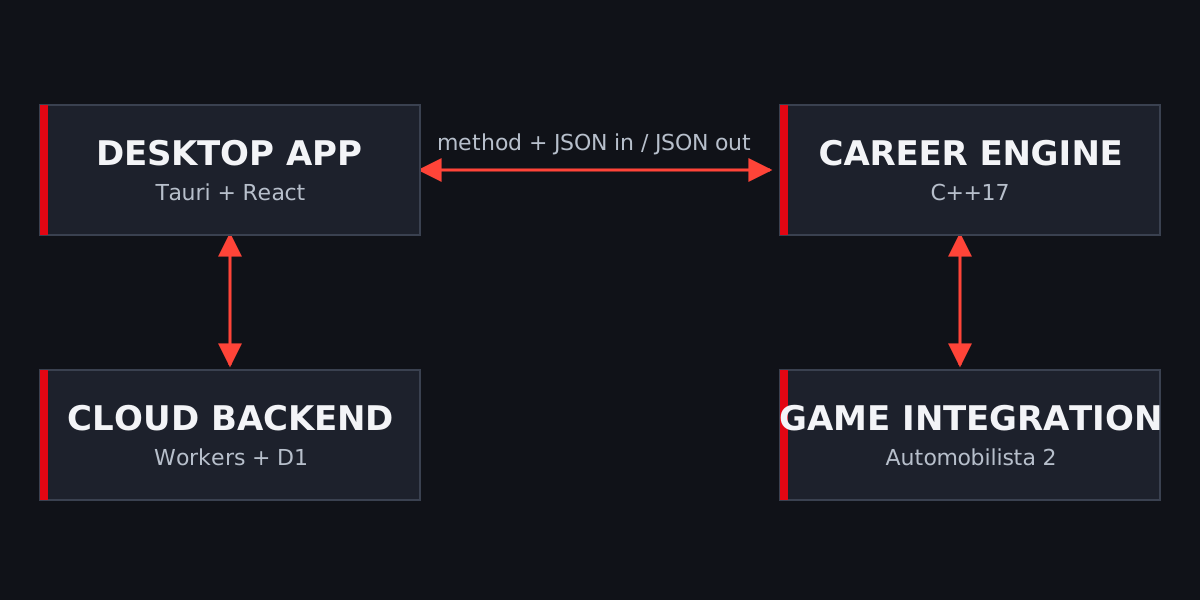
Decisions, checked rather than assumed
A setting that did nothing
- Problem
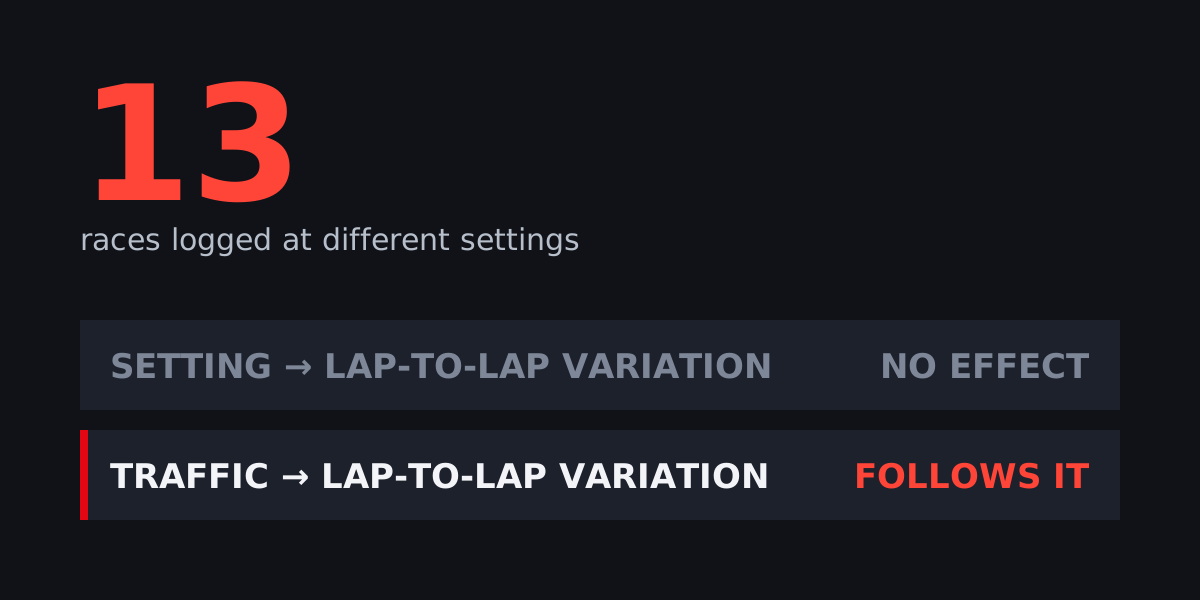
- A difficulty setting was meant to control how consistent AI drivers are from lap to lap. It stayed in for months, because nothing about using it looked broken.
- What I did
- Logged thirteen races at different settings and compared the lap-to-lap variation against the setting and against traffic.
- Result
- The variation followed traffic, not the setting. The assumption went, and the model was rebuilt on what was measured.
The instrument was the anomaly
- Problem
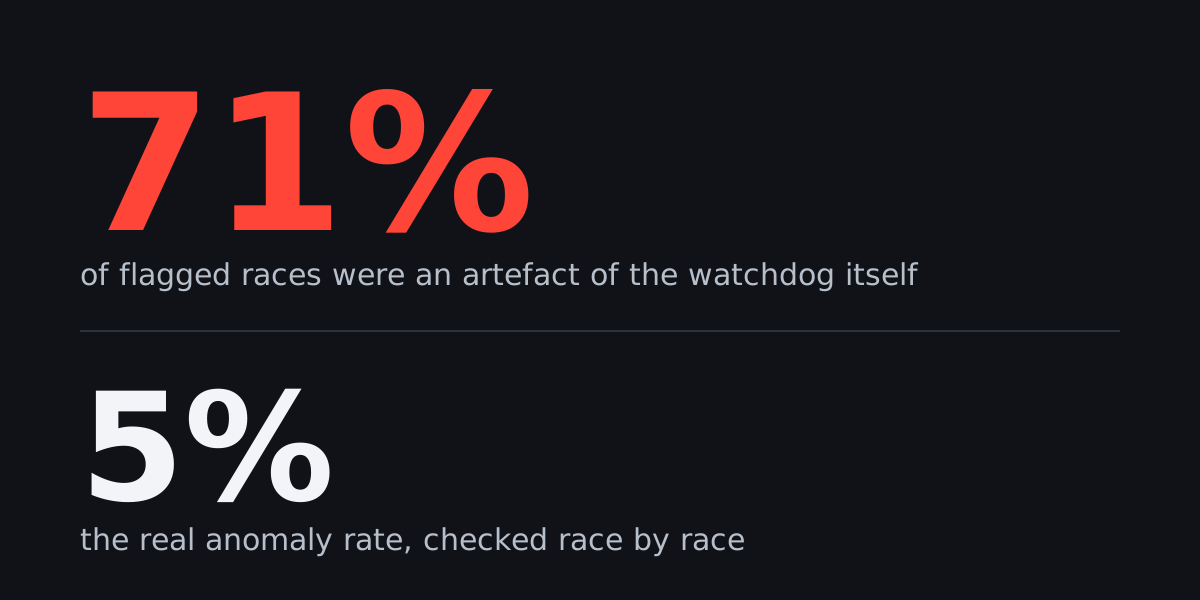
- A watchdog flagged a share of races as anomalous, and that share was quoted as a health metric.
- What I did
- Checked every flagged race by hand instead of trusting the rate.
- Result
- 71% of the flags were an artefact of how the watchdog sampled its own data. The real anomaly rate was 5%.
Count the grid that actually raced
- Problem
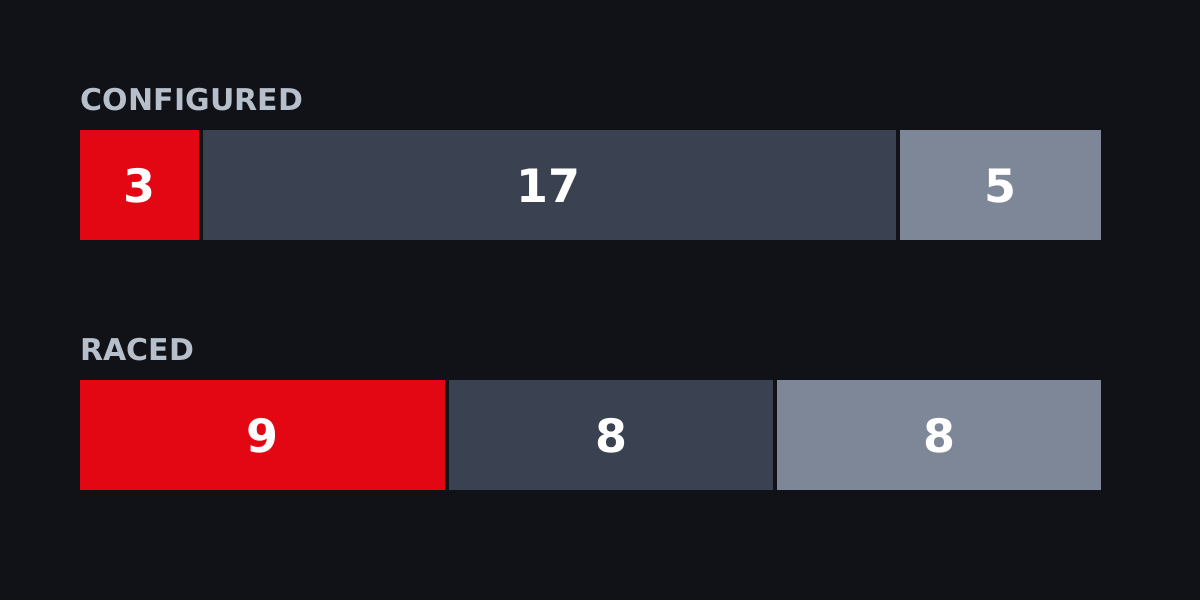
- A grid was configured to split 3, 17 and 5 cars across three skill tiers.
- What I did
- Counted the grid that reached the track instead of reading back the configured value.
- Result
- It raced as 9, 8 and 8: something downstream renormalised the split. Writing a value and reading it back are two different tests.
How it gets built
Most of the implementation goes through an AI coding agent, under plain rules. Development is test-driven, against an engine harness whose exit code is the number of failing tests. A behaviour is measured before it is changed. And any check that means auditing a large surface, such as every file that could contradict a claim, goes to an agent that runs the exhaustive version a person tends to cut short.
Read the code
A sanitised export of the career engine (contracts, transfer market, calendars, grids and ratings) runs on an invented world of fictional series and drivers, with its own CI. Published for review, not reuse.
Source on GitHub Browser demo